

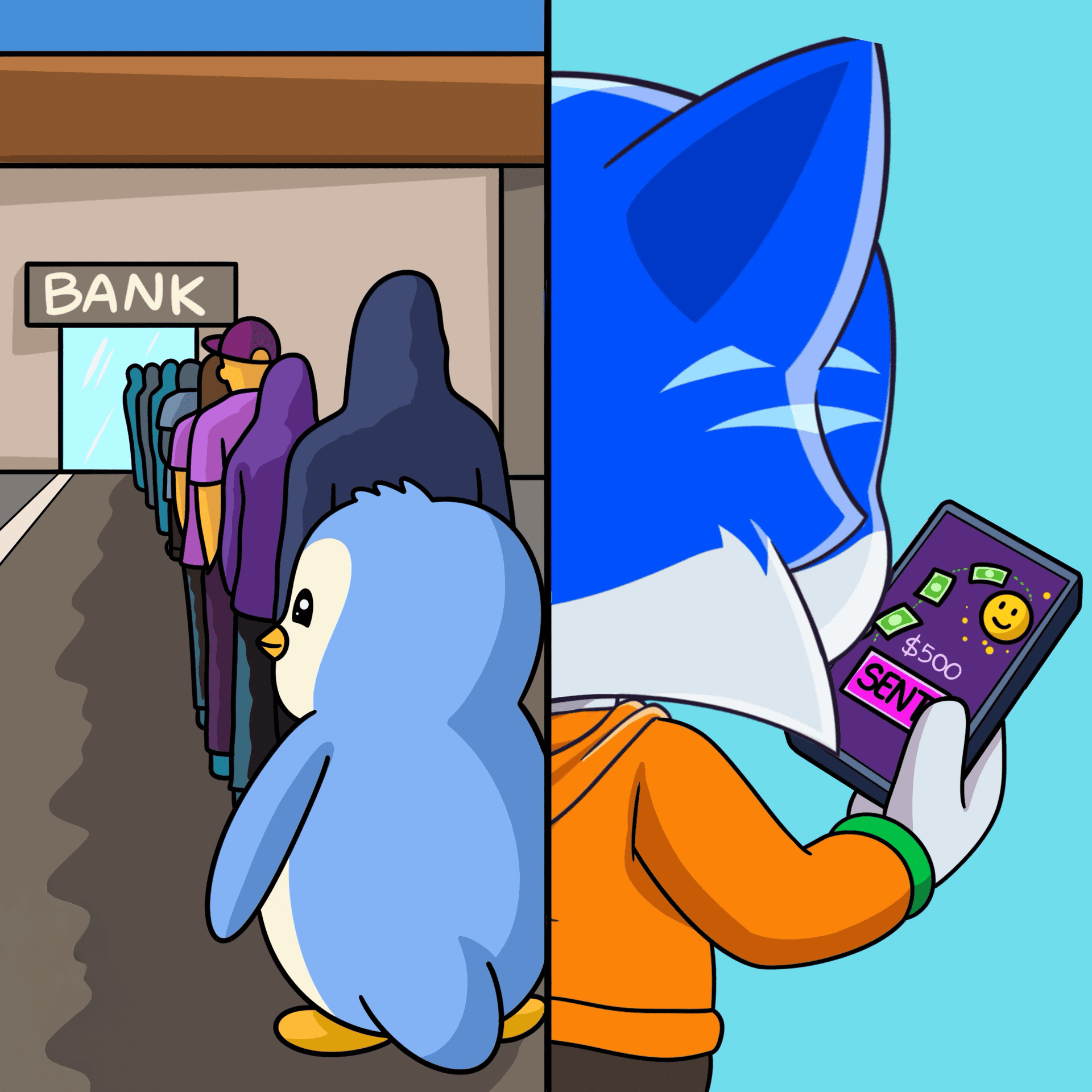
One of the most tangible comparisons is between traditional finance (TradFi) and cryptocurrency-based finance. In the traditional world, you likely have a bank account. That bank is a centralized intermediary that holds your money (essentially an IOU in their database). When you send money to someone electronically, the bank debits your account and credits theirs, possibly through other intermediaries. It’s all database operations behind the scenes, relying on trust in the bank and payment processors. There are delays (especially for cross-border transfers which can take days), fees (banks, card networks take cuts), and restrictions (banks can freeze funds, set limits, or require paperwork for certain transfers). Also, billions of people worldwide don’t have access to robust banking due to local infrastructure issues or strict requirements.
Cryptocurrency like Bitcoin or Ethereum offers an alternative: a peer-to-peer network where you can send value directly to anyone globally, without a bank in the middle. If Alice wants to pay Bob 1 Bitcoin, she just signs a transaction and broadcasts it; the network (miners/validators) updates the ledger, and Bob gets it. No one can arbitrarily stop the transaction (unless it violates the protocol rules or local government tries to intervene at the on/off-ramps). This means financial access is more open—anyone with an internet connection and a crypto wallet can receive funds or participate in the economy. That’s why you’ll hear about crypto’s potential for empowering the unbanked or being censorship-resistant money.
💸 FAST FACT: Remittance payments (e.g., from migrant workers to family overseas) often incur 7–10% in fees and take 3–5 days. A crypto transaction can cost a few cents and complete in under a minute—no intermediaries needed.
Speed and cost: Traditional networks like Visa process thousands of transactions per second, whereas Bitcoin might do ~7 TPS, Ethereum ~15 TPS (currently), which is much slower. However, improvements (newer blockchains, layer-2 scaling) are boosting crypto speeds. Some newer ones (like Solana, Sui, etc.) claim thousands of TPS. The cost of sending crypto can vary—sometimes it’s cheap (fractions of a cent on certain networks, or when not congested), sometimes expensive (Ethereum during peak usage had fees of tens of dollars per transaction). Traditional bank transfers vary too (free in-network or domestic, pricey across borders or via wire). So, neither is simply better in all ways yet. But crypto has the advantage of constant innovation and competition on these features (anyone can create a new protocol with optimizations), whereas the traditional system moves slower (it’s very regulated and uses older infrastructure like SWIFT messaging).
Control and Custody: As mentioned in Chapter 3, having a crypto wallet means you self-custody your assets. In TradFi, the bank or broker holds assets for you. Self-custody means freedom but also responsibility (lose your key, no customer service can help). Traditional accounts mean less worry on losing access, but you’re also subject to the institution’s policies and any broader crises (like a bank freezing withdrawals in an economic collapse, which has happened). Crypto is often described as letting you “be your own bank.” This cuts both ways—you don’t need permission to transact (which is liberating), but you also don’t have FDIC insurance or similar safety nets if you mess up.
Innovation: Web3 also enables entirely new financial instruments or automations via smart contracts (DeFi). For example, automated market makers (AMMs) allow trading tokens without a traditional exchange or market maker firm—instead liquidity is pooled by users and pricing is formulaic. This had no direct Web2 equivalent. Or lending platforms like Aave let anyone lend or borrow with algorithmic interest rates—without needing a bank officer’s approval. These services run 24/7, globally accessible, typically with just some crypto collateral and no paperwork. The flip side is, no KYC (ID verification) can mean regulatory gray areas, and if you’re cheated or there’s a bug, there’s no central authority to complain to (it’s “code is law” to an extent, though some decentralized governance might intervene).
🔗 DID YOU KNOW?
In 2023, crypto-based charity GiveDirectly used blockchain to deliver aid directly to recipients in Kenya—no banks, no paperwork, just wallet-to-wallet giving. Web3 makes this kind of instant, borderless giving possible.
Summing up Finance: Traditional systems rely on trusted intermediaries (banks, payment processors, governments backing currencies) and regulations for trust. The Web3 system relies on cryptography and consensus for trust (you trust math and network agreement more than institutions), aiming to be more inclusive and resilient. They currently coexist—crypto isn’t replacing banks at large scale yet, but it offers an alternative or complement. For example, international remittances using crypto can be faster/cheaper than Western Union, which is valuable to some communities. Or someone in a country with high inflation might prefer a crypto stablecoin to store value instead of the volatile local currency.
✍️ CHALLENGE:
Compare how you'd send $500 to a friend in another country using your bank vs using USDC or Bitcoin.
- What are the steps?
- How long would each take?
- What could go wrong?