

In traditional organizations or platforms, decisions are made by a central authority—a CEO, a board, or moderation team. Users or customers have little direct say beyond feedback or voting with their feet. For instance, if a game changes its rules and players don’t like it, they can complain, but ultimately the company decides. Or if a social network changes its algorithm, users adapt or leave; they aren’t voting on it.
Web3 introduces the idea of Decentralized Autonomous Organizations (DAOs), which are like internet-native co-ops or communities where decisions are made collectively via blockchain-based voting. A DAO typically uses a governance token (discussed in Chapter 2) to let holders propose and vote on changes. For example, a DAO running a DeFi platform could have votes on interest rate parameters or new features; token holders cast votes proportional to their tokens. The results, if passing certain thresholds, can even automatically execute changes via smart contracts. It’s a blend of democracy and automation.
🧠 QUICK EXAMPLE: In 2021, Uniswap token holders voted to allocate $20 million to ecosystem development. The entire proposal process and final vote were public, immutable, and executed via smart contract—no boardroom needed.
This decentralized governance model is a contrast to how companies are run. It’s not that Web3 means everything is a DAO—there are still centralized dev teams for many projects—but the ethos is to progressively decentralize decision-making to the community of users/investors. This aligns incentives: those who care about the project get to influence it. It’s akin to cooperative ownership or shareholder voting, but often more transparent and frequent. For example, all votes can be seen onchain, and any token holder can submit a proposal (in theory). The DAO concept even extends beyond finance: there are social DAOs (communities pooling funds and making collective decisions, like a group that buys NFTs or even tries to buy a rare manuscript at auction), and protocol DAOs (governing tech like blockchains themselves or applications).
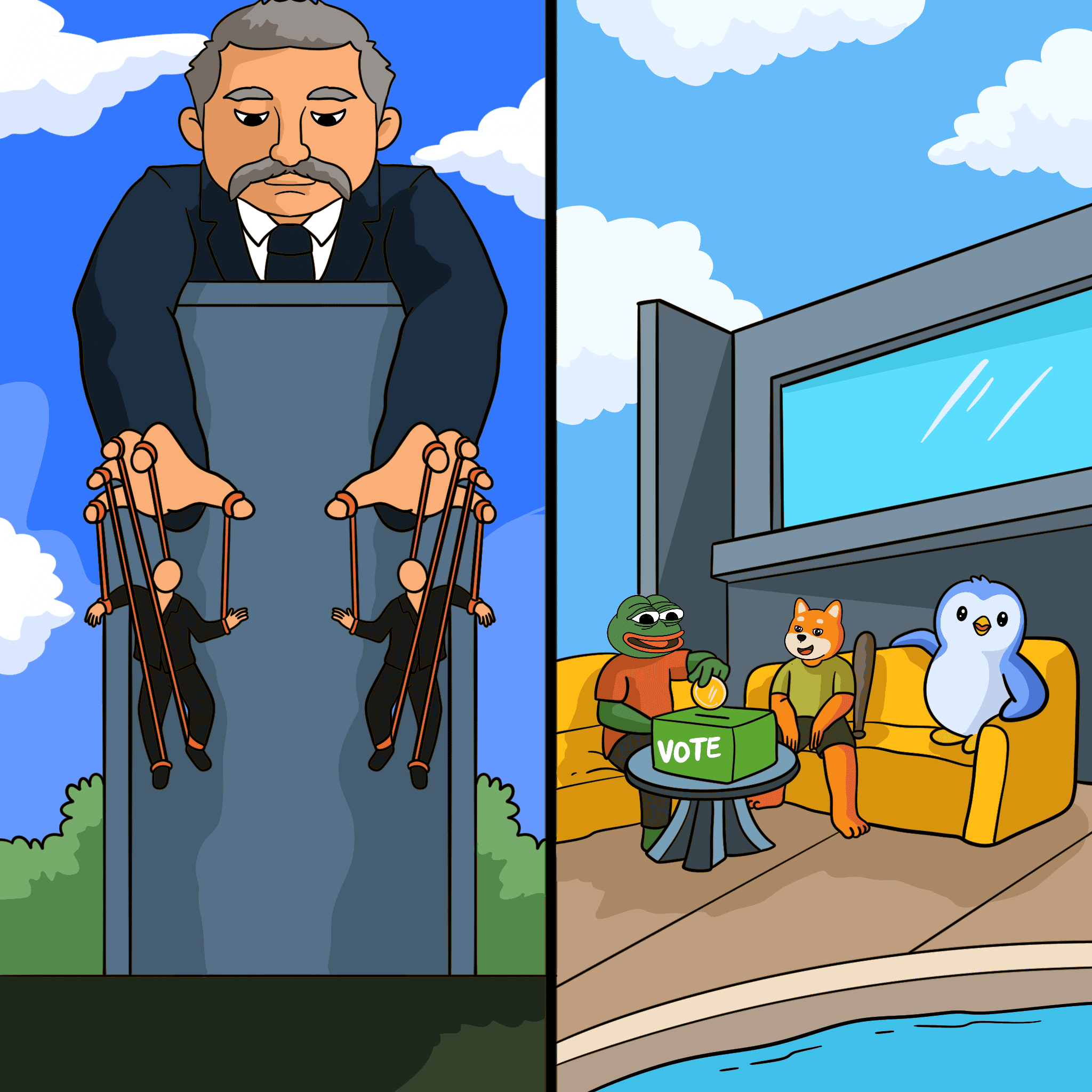
Traditional internet communities (like Reddit forums or open-source projects) have had forms of decentralized governance (moderators, consensus, etc.), but Web3 tools formalize it and allow governance over not just discussions but actual assets and system parameters. A famous example was ConstitutionDAO, where thousands of people pooled crypto funds to attempt to buy a copy of the U.S. Constitution at auction—they organized entirely online via a DAO structure, raising over $40 million (they narrowly lost the auction, but it showed the power of quick collective action). Another is MakerDAO, which manages a stablecoin system (Dai) via holders of MKR governance tokens who vote on risk parameters.
In summary, the Web3 model vs Traditional model could be compared like so:
-
Control of platforms: Traditional is centralized control (companies, admins). Web3 introduces community control (through tokens and consensus). Example: Traditional social network bans content top-down; a Web3 social platform might let community vote on moderation policies or have users filter via personal preferences rather than central censorship (though content moderation in Web3 is a complex topic still being figured out).
-
Economics: Traditional platforms extract value (ads, fees) to shareholders. Web3 platforms aim to distribute value to users (tokens, rewards) who are also stakeholders. This can create more aligned incentives – early users actually own a piece, not just provide free content.
-
Innovation and Composability: Traditional services often silo innovation and may not integrate competitors. Web3 services, being open-source and on public chains, often allow plug-ins and mashups (composability as we’ll detail in Chapter 8). This means if one project builds a great feature, another can integrate with it permissionlessly. Traditional dev might call this stealing or require an API license; Web3 encourages it to build network effects across the ecosystem.
✍️ EXERCISE: Build a Mini DAO
Pick a topic (e.g., fund a school garden).
- Create a governance token name
- Define what holders can vote on
- Decide how tokens are distributed
Now outline 1 proposal you'd put to vote.