Inside Alchemy CoBuild 2026
Author: Alchemy Team
On April 28, we gathered 150 of the people building the future of money in NYC for a half-day program called CoBuild. JPMorgan's CEO of Wealth Management opened the morning. Polymarket's founder closed the afternoon. The conversation in between spanned what happens when AI agents become the new users of the financial system, and what the firms running today's system are doing about it.
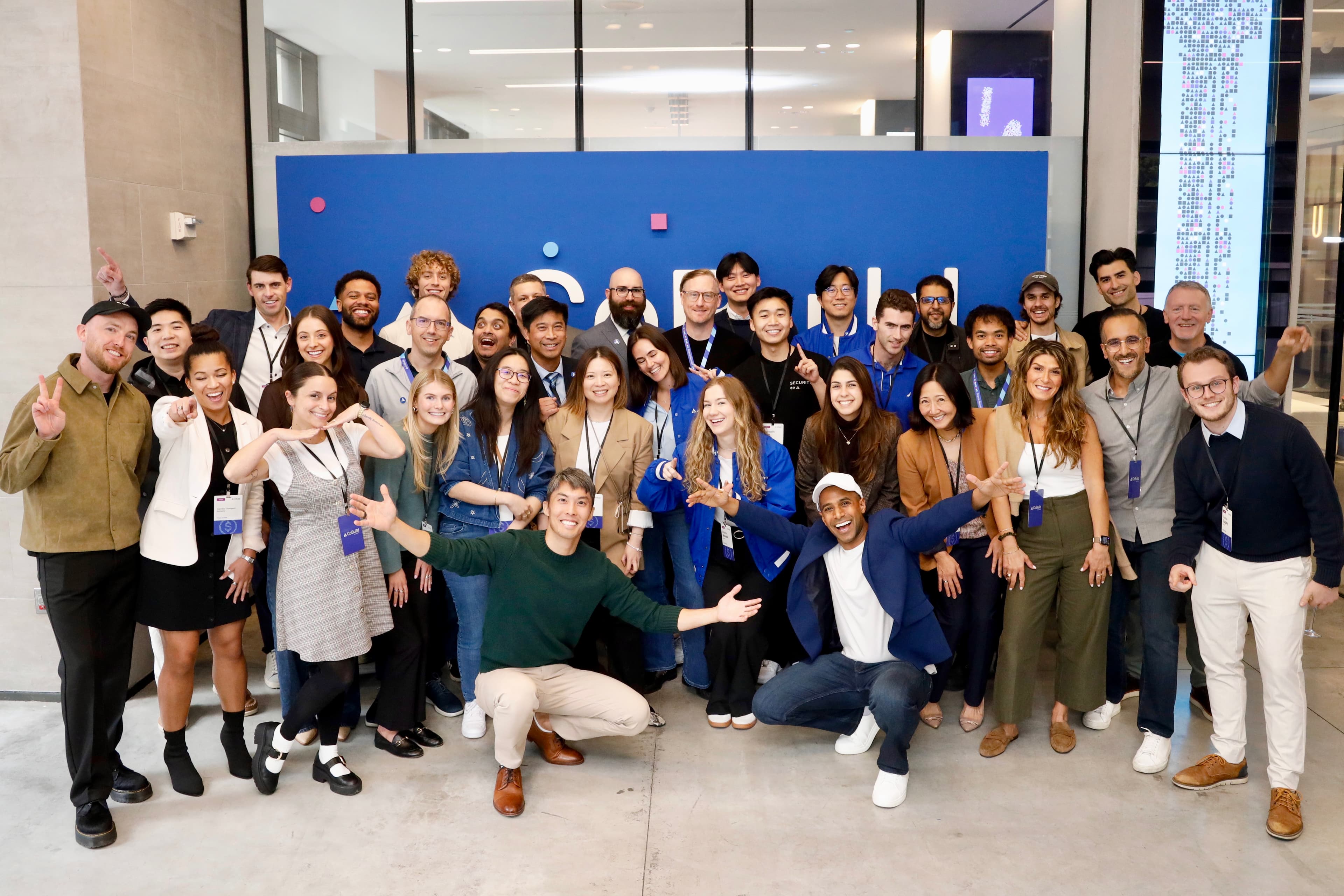
Highlights from the panels
What JPMorgan is hearing from clients
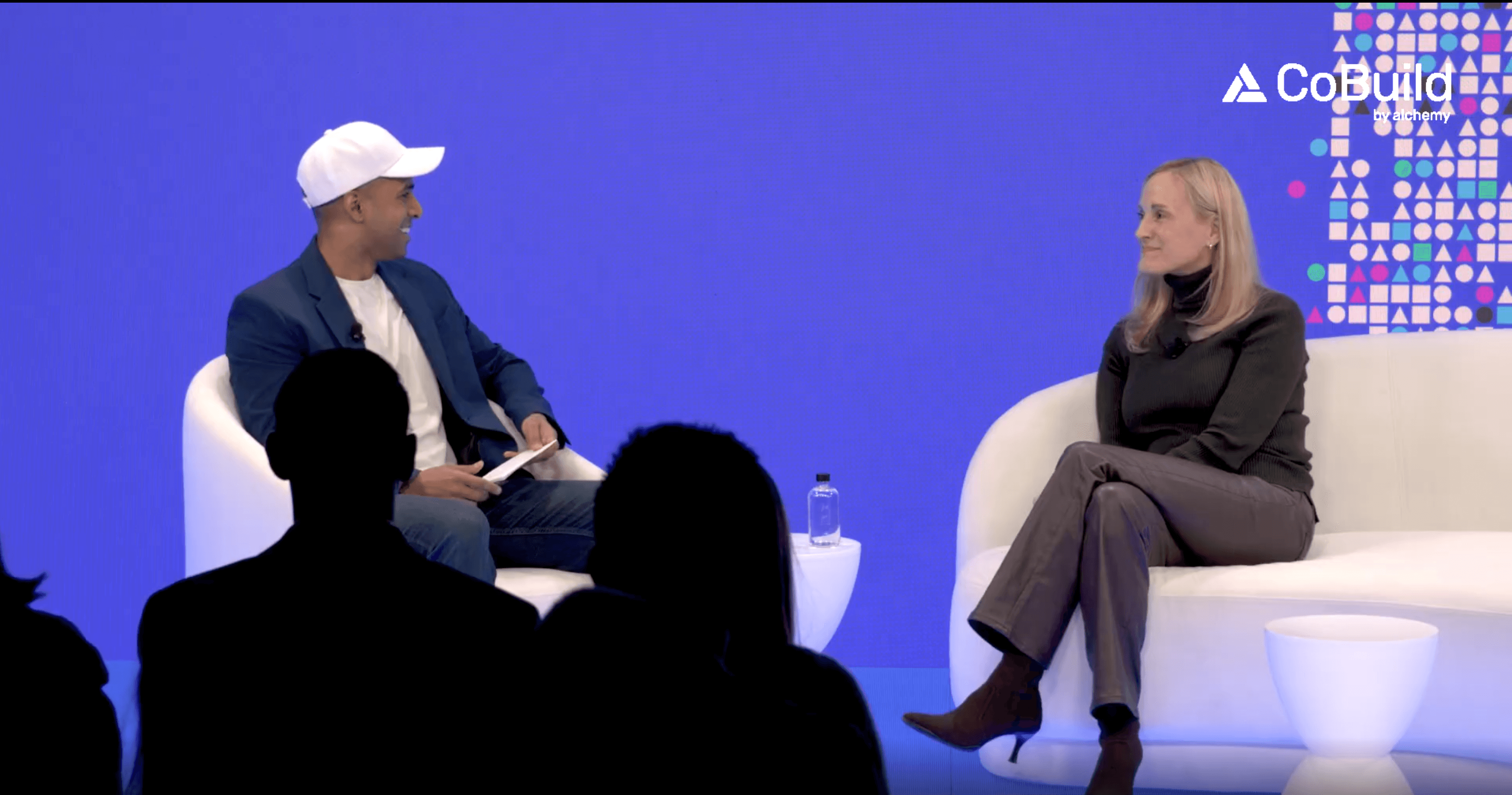
Kristin Lemkau, who runs JPMorgan's $1.3 trillion wealth-management business and oversees roughly 6,000 advisors, opened the morning in conversation with our CEO Nikil Viswanathan. The conversation was off the record, so we can't share specifics, but the signal was unmistakable: the world's largest bank is no longer asking whether crypto is real. It's asking how to deliver it to clients.
AI is reshaping the financial advisor's role from the inside, not from the edges. The questions senior leadership is hearing from clients have moved past curiosity.
Agents are the next employees
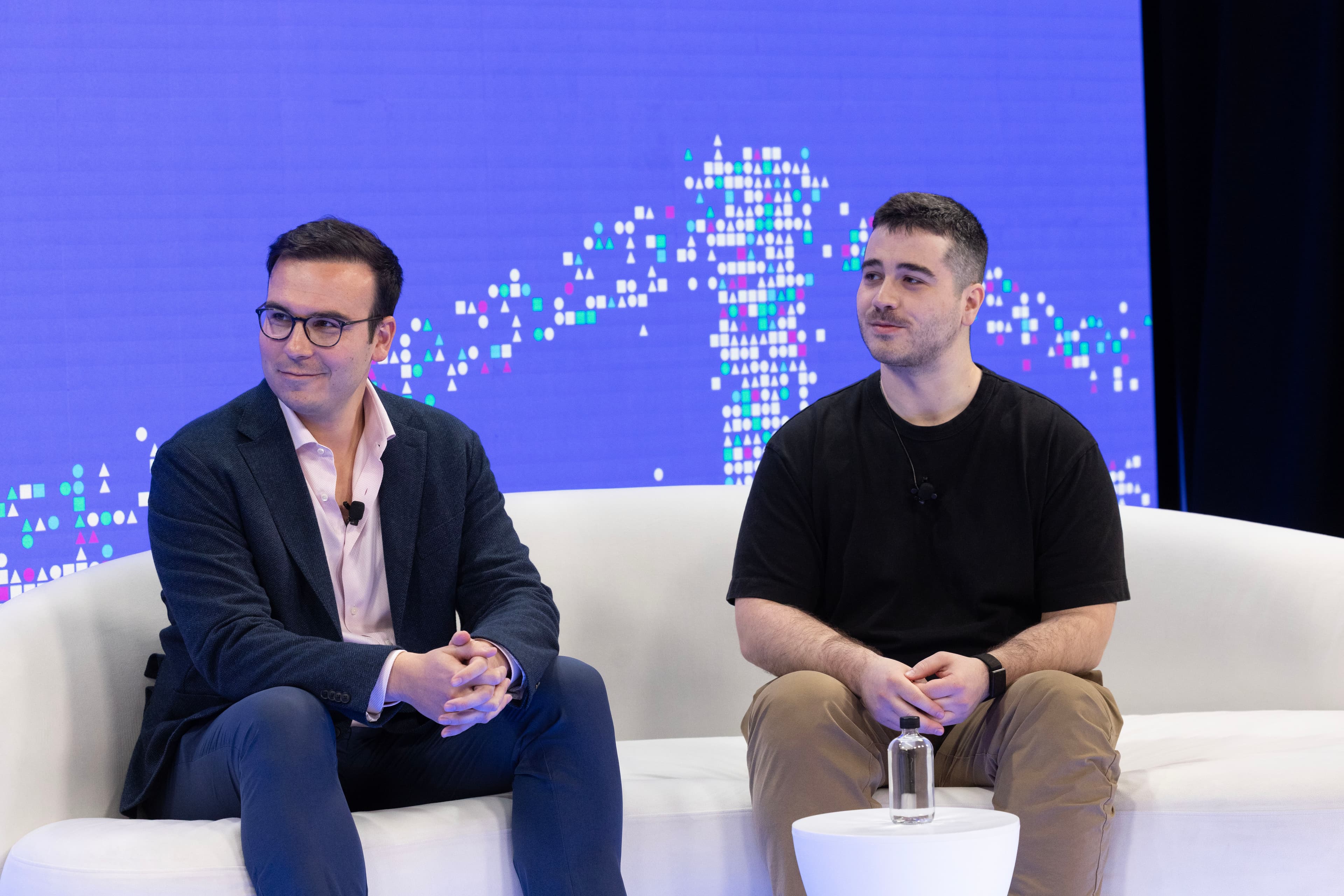
Bill Borden of Microsoft and Chainalysis CEO Jonathan Levin talked about what changes when AI agents start moving real money at scale.
- Borden's framing for the agentic economy: "What's an agent going to be? It's going to be somebody you bring into your organization. You're going to assign them an ID. You're going to give them permissions and control capabilities." Microsoft's Agent 365 is built around exactly that: a governance plane that registers, permissions, and audits agents the way it manages employees.
- Levin's read on the institutional side: appetite for onchain settlement is no longer experimental, and auditability is what unblocks the next leg.
- Asked where institutional payment volume settles in ten years, both gave the same answer: most of it lands on public infrastructure.
Stablecoins are the agentic rail
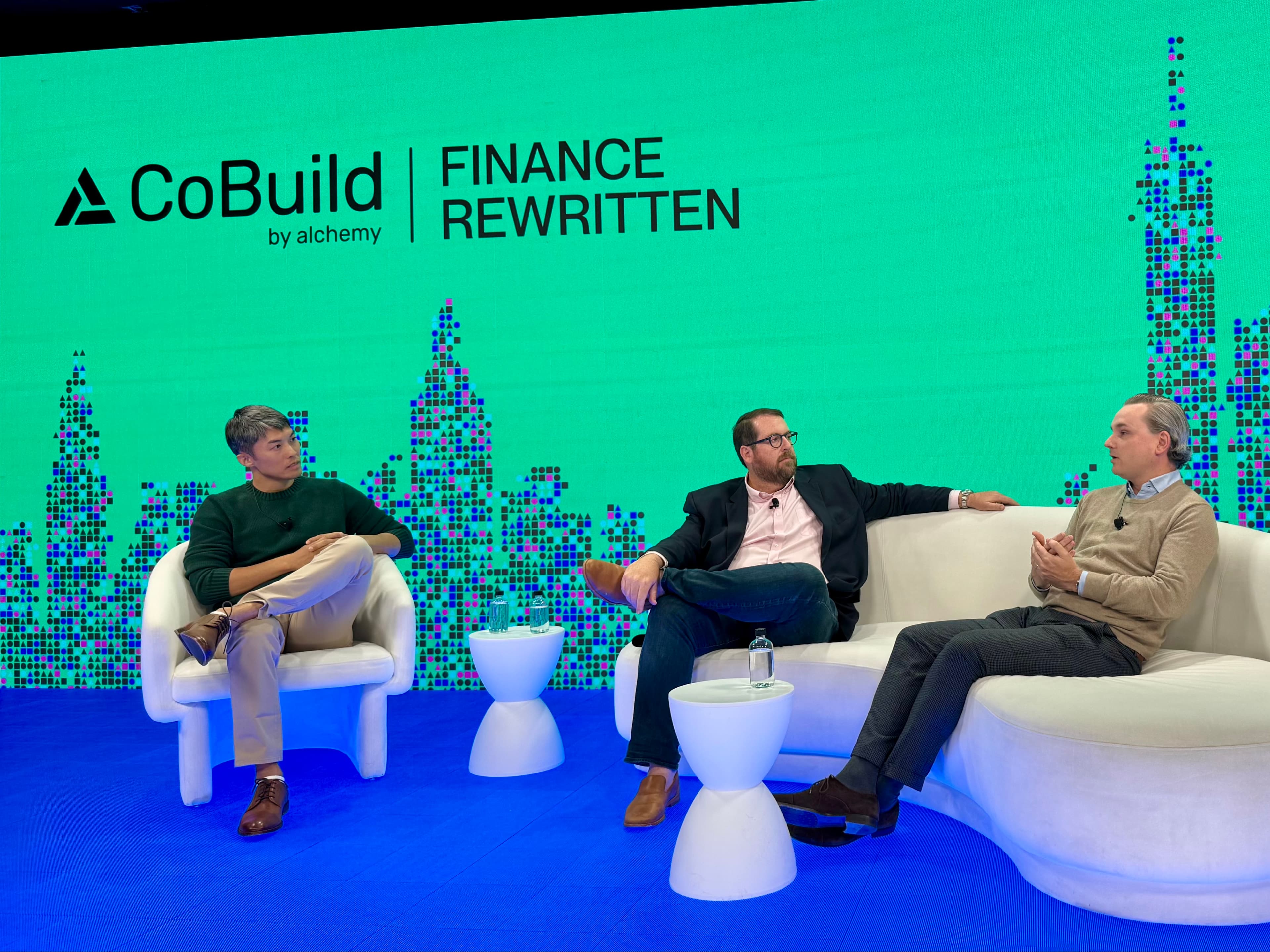
Erik Reppel built x402 at Coinbase. Edward Woodford runs Zerohash, which now powers Stripe, Interactive Brokers, BlackRock, Morgan Stanley, and most recently Charles Schwab. They sat with our CTO Guillaume to talk about what is moving through their systems today.
- x402, the stablecoin payment protocol Coinbase open-sourced in May 2025, has cleared more than 100 million transactions since launch.
- Zerohash's stablecoin volume grew over 600% last year. Stablecoins overall processed $33 trillion in 2025, more than Visa and Mastercard combined.
- Reppel had the cleanest line on why agents settle naturally on stablecoins: "Stablecoins support refunds, not chargebacks."
What stablecoins did for the dollar, applied to stocks
Ondo Finance's Ian De Bode and Paxos's Peter Jonas joined our co-founder and President Joe Lau on tokenized equities.
- De Bode's pitch was the sharpest framing of the morning: "We do for stocks and ETFs what stablecoins did for the US dollar." Ondo has tokenized more than 200 US stocks and ETFs and is seeing 5–6% week-over-week growth, with most of the new demand coming from Asia.
- Paxos powers stablecoin issuance for PayPal, Mastercard, Interactive Brokers, Mercado Libre, and now Schwab.
- Asked who the Charles Schwab of crypto would be, Jonas's answer was simple: "The answer is Charles Schwab."
Inside real-time settlement
Eric Saraniecki of Digital Asset and Christian Rau of Mastercard had the most contrarian session of the day.
- The Canton Network, which Saraniecki's team built, runs hundreds of billions of dollars of repo daily through Broadridge's distributed ledger repo platform. Goldman Sachs runs its tokenization platform on Canton; DTCC and BNP Paribas are among its institutional partners. Roughly half of all tokenized bonds ever put onchain have moved through Canton. His read on cross-chain interoperability: get rid of most of the chains.
- Mastercard runs 3.8 billion cards across 100 million-plus acceptance locations and is increasingly putting stablecoins in the background of that network.
- Rau's framing for what new payment rails actually need: "It needs to be safe, simple, secure. And there needs to be optionality in choice."
The AI and crypto trade is one trade
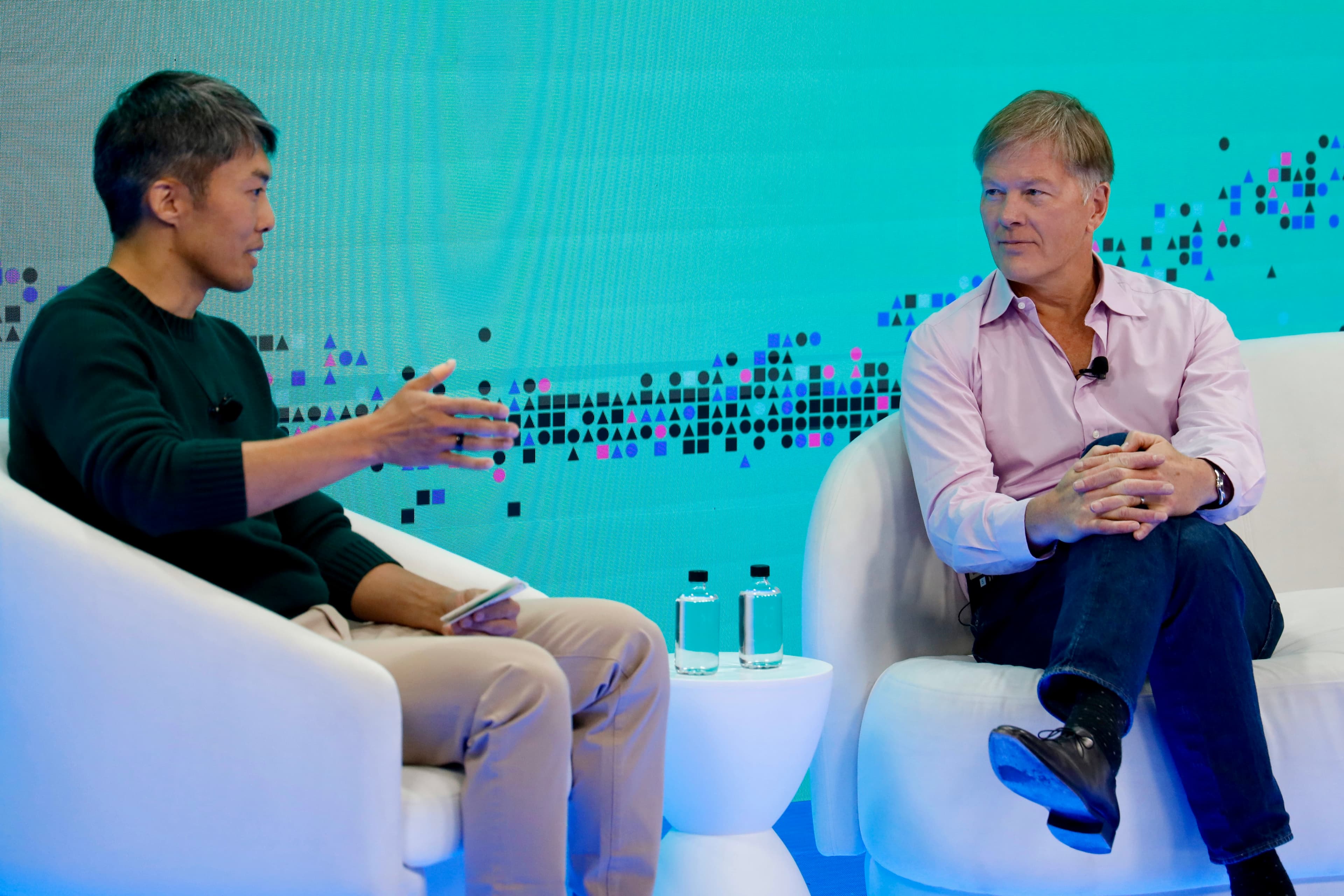
Dan Morehead founded Pantera Capital in 2003 and pivoted entirely to crypto in 2013; Pantera invested in Alchemy in 2019. He sat with Joe to make the case that has been the through-line of his fund for over a decade: AI and crypto are not two trades. Pantera's data shows AI roughly 33% above its log trend over the past four years and Bitcoin roughly 43% below trend. "The biggest divergence we have seen in history," Morehead said. His one-line case for the convergence: "Robots don't use paper money. AI agents aren't going to walk down the street to an Ionic Column bank and get a bank account. They have to use digital money."
The next NYSE will be built in a bedroom
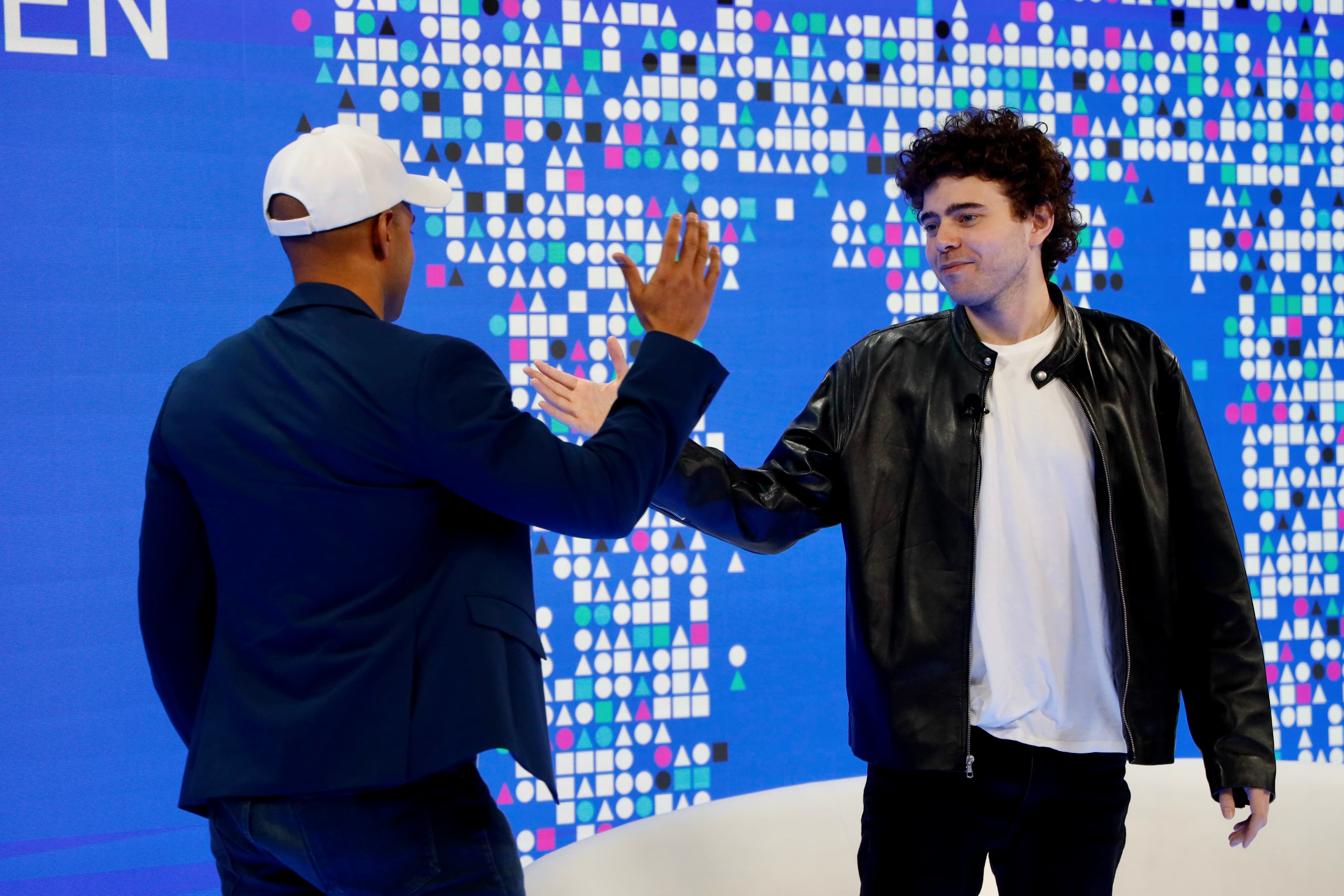
Polymarket founder Shayne Coplan closed the panels. He started Polymarket in 2020 from his apartment during COVID. The platform processed $22 billion in volume in 2025, and last October ICE, the parent of the New York Stock Exchange, invested $2 billion at a $9 billion valuation. Coplan's thesis from day one has been that markets produce truth more reliably than polls do, and that crypto was the only infrastructure that made the product viable for a solo founder. His closer: "The next New York Stock Exchange will be built by a kid in his bedroom."
What we shipped at CoBuild
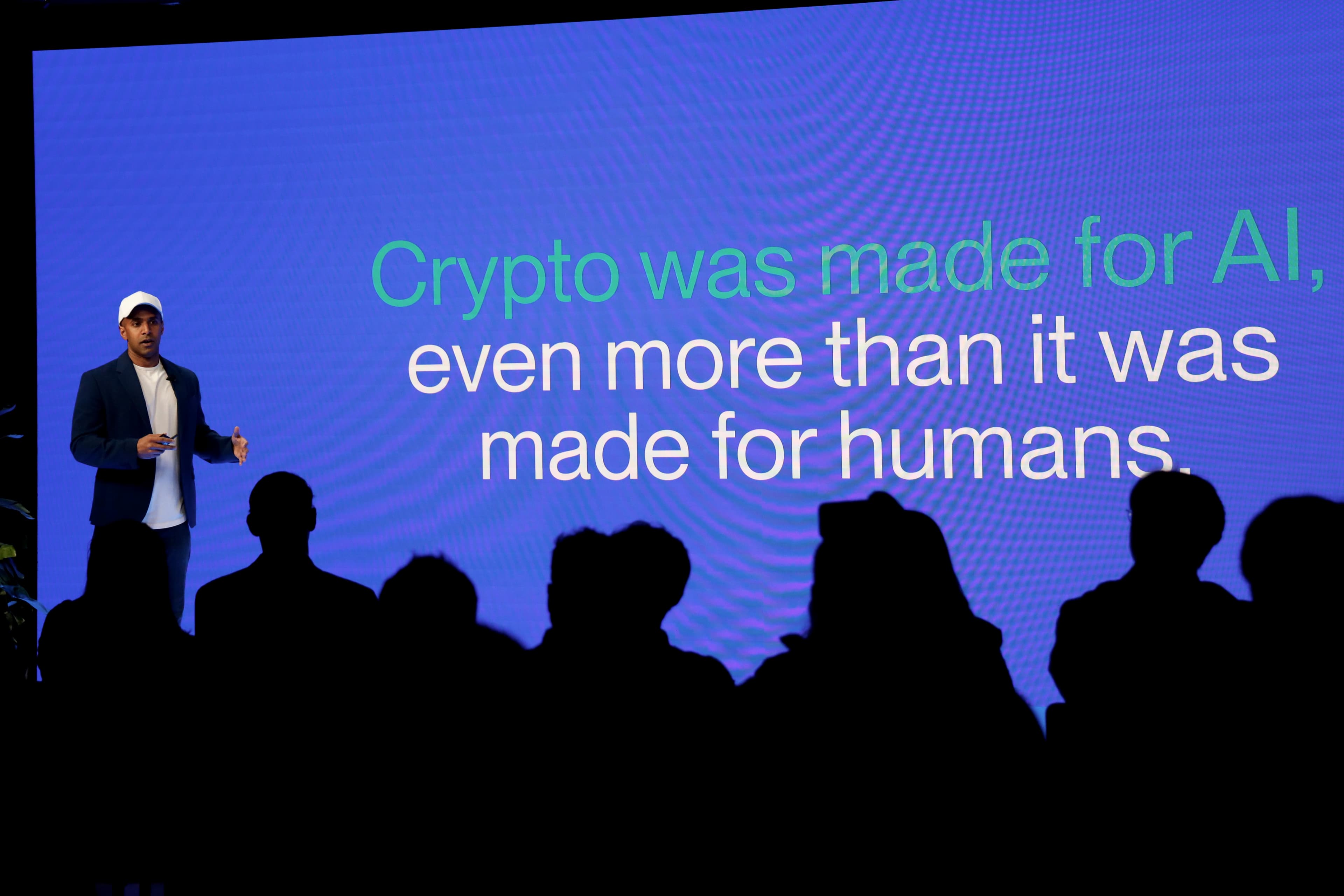
Nikil and Joe closed the day out with a keynote covering what we had built CoBuild around. Every panel before it had been about institutional finance moving onchain. The shift underneath that: AI agents are becoming the new users of finance, and the infrastructure for them has to be built for them. Nikil's framing for why build on crypto rather than traditional rails: "Crypto might be made for AI even more than it was made for humans."
The announcements:
- Cortex, our platform layer, powers the Alchemy stack and powers the trillion dollars of annual onchain volume our customers run through us.
- AgentCard, a credit card built natively for agents, is in public beta at agentcard.ai. 75,000 sign-ups in the private alpha.
- AgentPay, the merchant integration for accepting agent payments across x402 and emerging agent payment protocols, is in private beta. More here.
- A new partnership with Privy, a Stripe company, for end-to-end onchain transaction management. More here.
To make it concrete, Joe revealed that the agent in our demo video had bought a small batch of Broadway tickets earlier that day and taped them under random chairs in the room. People started checking under their seats.
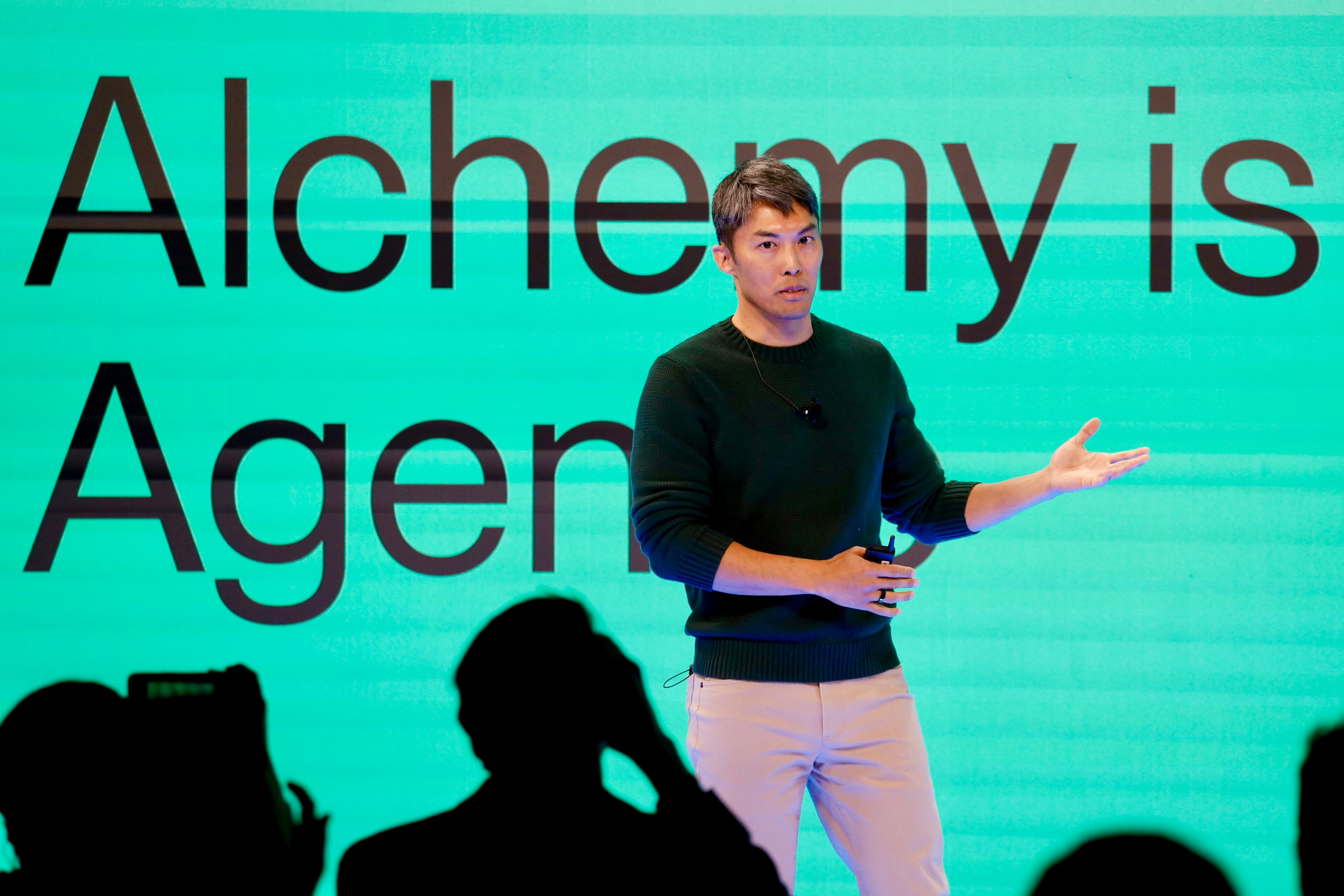
To every speaker, to the 150 people who attended, and to the thousands who tuned into the livestream, thank you.
Watch recordings of all CoBuild sessions on our YouTube channel.
See you at CoBuild II very soon.
Alchemy Newsletter
Be the first to know about releases
Sign up for our newsletter
Get the latest product updates and resources from Alchemy
By entering your email address, you agree to receive our marketing communications and product updates. You acknowledge that Alchemy processes the information we receive in accordance with our Privacy Notice. You can unsubscribe anytime.

Related articles
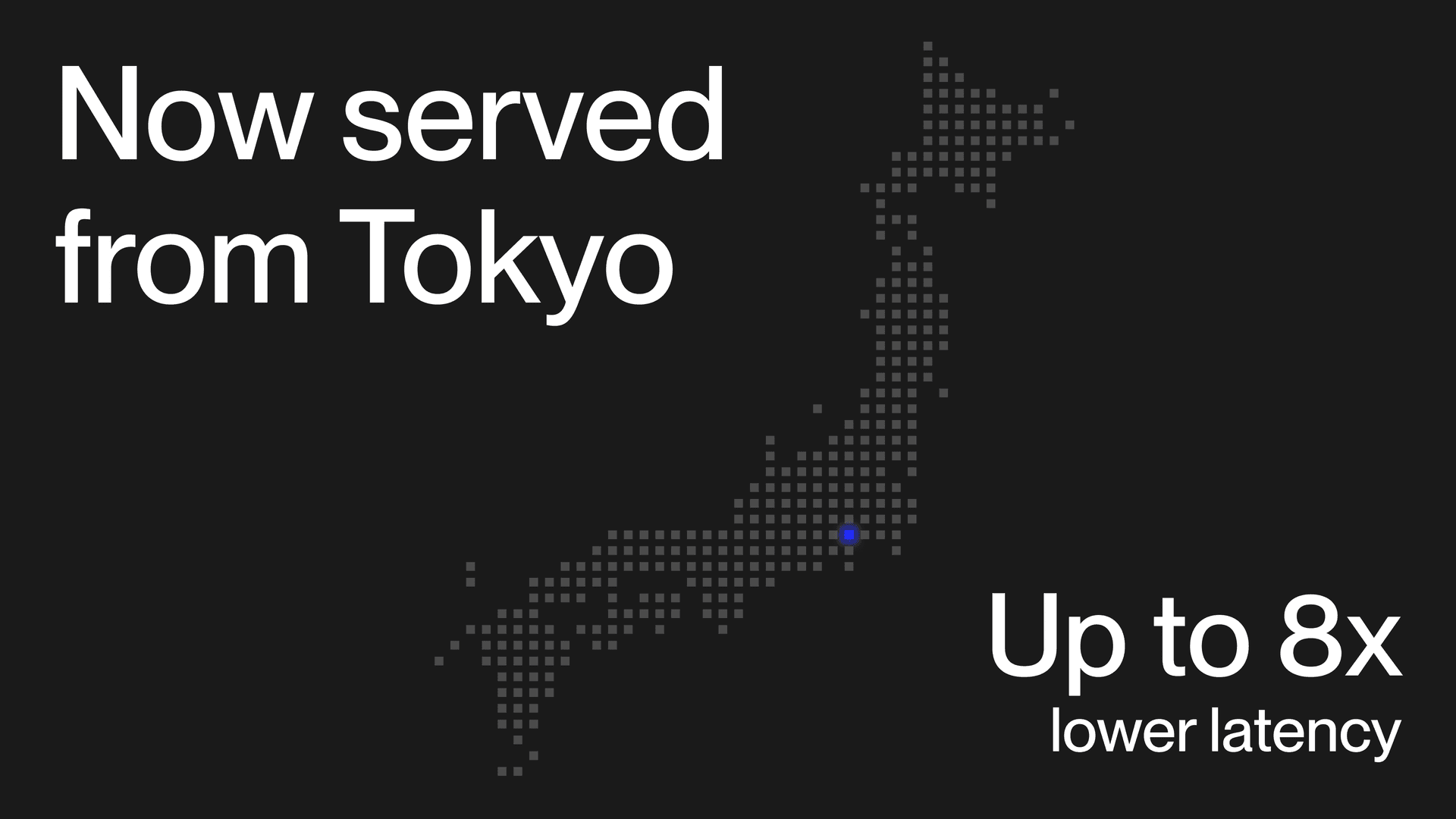
Alchemy launches Tokyo regional support
Node RPC, WebSockets, and Dedicated Clusters are now live in Tokyo, with up to 8x lower median latency for requests from Japan.
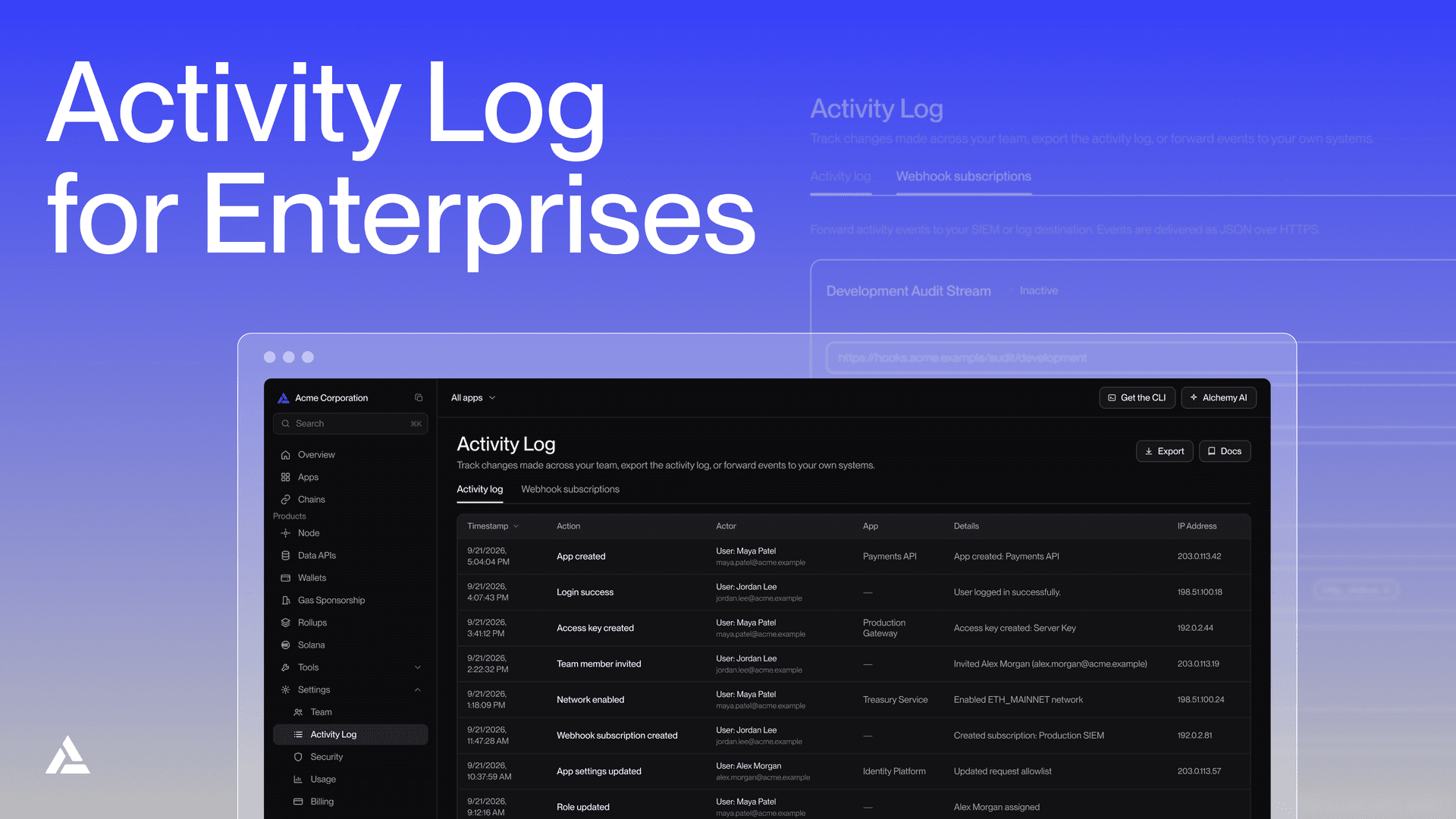
Introducing Activity Log for Enterprises
Activity Log is now available for enterprise teams. Review account changes in the dashboard, or send them to your SIEM.

Arc mainnet is live on Alchemy
Arc, an open Layer-1 for the world's financial markets, is live on Alchemy with Day 1 RPC, WebSockets, Data APIs, Wallet APIs, and gasless transactions.