
Blockchain Payments for Salesforce
Blockchain Payments for Salesforce is a native Salesforce tool that enables companies to accept and send crypto payments.






What is Blockchain Payments for Salesforce?
Blockchain Payments for Salesforce is a native Salesforce tool that enables corporate sales teams to accept and send crypto payments using their existing business processes. Corporate sales teams are not knowledgeable in crypto, but are interested in increasing international sales by accepting crypto payments. As a native tool for Salesforce, companies use their existing processes to complete their business transactions, with Web3 Payments as an additional option. Selected by Circle, Ripple, and Cardano to implement their Salesforce applications, Blockchain Payments for Salesforce supports payments, compliance, and automation for stablecoin and blockchain transactions.
Web3 dapps and developer tools related to Blockchain Payments for Salesforce
Discover blockchain applications that are frequently used with Blockchain Payments for Salesforce.
 Umbra
Umbra CoinSender
 Interspace
 JustMoney


Developer resources from Alchemy
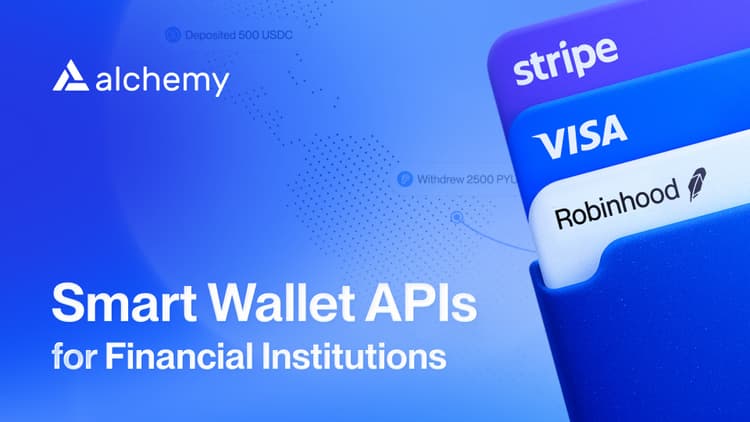
Smart Wallet APIs for financial institution requirements
The stablecoin market has surged to over $240 billion and is projected to hit $2 trillion by 2028. Major banks are launching stablecoins while Congress passed the GENIUS Act. Smart Wallet APIs help financial institutions integrate onchain
Tempo Testnet is live on Alchemy: the payments-native blockchain
Tempo is a Layer 1 blockchain built specifically for institutional payments and stablecoins, featuring payment-optimized infrastructure, native account abstraction, and sub-second finality with Alchemy support.
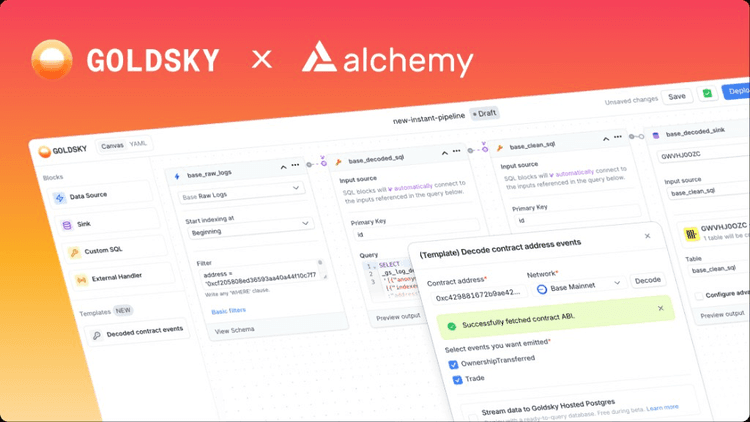
How Goldsky kept transactions flowing with zero downtime
Goldsky migrated its Compose bundler and paymaster to Alchemy and built a provider abstraction layer that makes failover a single environment variable change—no code deploy, no downtime.
Blockchain Payments for Salesforce alternatives
Explore web3 competitors and apps like Blockchain Payments for Salesforce.
 Lightning Network
 Superfluid
 P-Link
 EFY Finance
App store listings are independently reviewed and written by Alchemy using a combination of inbound submissions, editorial research, public project sources, and third-party directories, including ecosystem data from The Grid under the Open Database License, DefiLlama, DappRadar, Reown, and chain ecosystem pages.