
Datai
Datai Network is a modular, decentralized data layer that aggregates and enriches blockchain data, exposing AI-ready intelligence via APIs for AI agents, apps, wallets, and crypto-finance tooling.




What is Datai?
Datai Network is a decentralized data infrastructure that turns raw blockchain activity into AI-ready intelligence. The network aggregates data across multiple chains, applies in-house machine learning models to label and categorize smart contracts, and exposes the enriched data to consumers via APIs and a natural-language MCP layer. The architecture is split into three layers: a data sourcing layer where node operators run indexers and developers add protocol integrations, a refining layer where ML models clean and classify the indexed data, and an application layer that powers customer-facing tools across compliance/AML, financial analytics, wallet user-insights, and on-chain AI agents. Datai launched as Merlin, a centralized DeFi data provider, before transitioning to a decentralized network to scale coverage across DeFi, NFTs, RWA, and GameFi. The $DATAI token is used for staking, paying for premium analytics, and governance.
Web3 dapps and developer tools related to Datai
Discover blockchain applications that are frequently used with Datai.
 DexCheck
 DropsTab
 InsightX

 DexView
Developer resources from Alchemy
Onchain AI agent architectures: five build patterns
Five build patterns for onchain AI agents, each with a worked example: wallet watchers, event-driven reactors, portfolio rebalancers, detect-then-execute multi-agent splits, and safe pre-mainnet testing.
Pharos support is live on Alchemy
Pharos, a Layer 1 built for real-world asset circulation and institutional DeFi, is now supported on Alchemy. Learn what makes it different and what teams are already building.
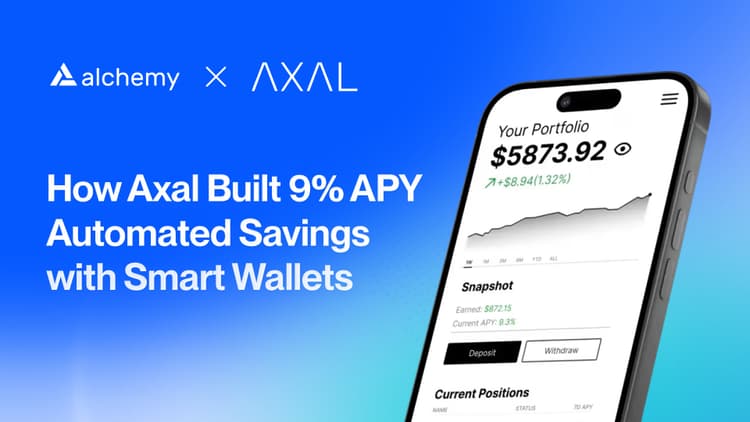
How Axal built 9% APY automated savings with smart wallets
Axal: 9% APY DeFi savings via smart wallets. Sub-400ms deposits, 99% lower fees, automated multi-protocol diversification.
Datai alternatives
Explore web3 competitors and apps like Datai.
 DeFi Saver
 Oxygen
 The Crypto App
 Instadapp
App store listings are independently reviewed and written by Alchemy using a combination of inbound submissions, editorial research, public project sources, and third-party directories, including ecosystem data from The Grid under the Open Database License, DefiLlama, DappRadar, Reown, and chain ecosystem pages.