
Silo Finance
Silo Finance creates permissionless and risk-isolated lending markets.







What is Silo Finance?
Silo Finance is an isolated lending protocol that creates permissionless markets for any asset, liquid or not. Its isolated-pool approach means lenders are only exposed to the risk of the specific market they deposit into — if one token experiences an exploit, other markets are unaffected. Silo v3 offers lenders a triple-source yield model: borrower interest, liquidation fees paid directly to lenders, and collateral upside. The protocol supports markets for real-world assets, tokenized stocks, LP tokens, and long-tail assets. Silo's innovative liquidation system protects lenders in any scenario — when DEX liquidations cannot be performed, collateral is delivered directly to lenders. Every market includes a comprehensive risk map with oracle reliability, collateral assessment, and bad debt tracking.
Web3 dapps and developer tools related to Silo Finance
Discover blockchain applications that are frequently used with Silo Finance.
 Sky
Sky BIMA CDP
 Sovryn

 Savvy
Savvy
Developer resources from Alchemy
Best blockchain API for stablecoin payments and monitoring
A stablecoin payments API has two jobs: moving money and watching it. Here's what to look for in real-time monitoring, multi-chain, and agent payments.
Best Base RPC provider for low latency: a Base, Arbitrum, and Optimism benchmark
In Alchemy's retained public benchmark window, Alchemy delivered the lowest average and p95 read latency on Base among four tested paid providers, with the fewest observed failures.
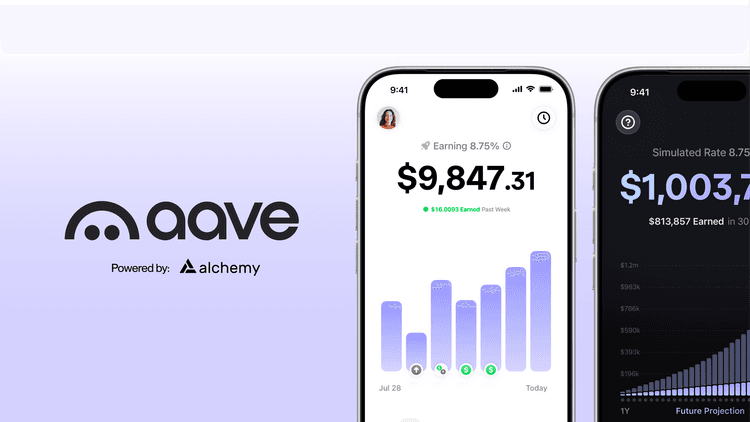
How Aave runs the largest lending protocol in DeFi across 20+ chains with Alchemy
Aave has run its traffic on Alchemy since 2021, powering protocol data across 20+ networks and a gasless consumer app, through V4, Cortex, and spikes above 2M CU/s.
Silo Finance alternatives
Explore web3 competitors and apps like Silo Finance.
 Aave
Aave
 Compound
 Lista DAO
 Native
App store listings are independently reviewed and written by Alchemy using a combination of inbound submissions, editorial research, public project sources, and third-party directories, including ecosystem data from The Grid under the Open Database License, DefiLlama, DappRadar, Reown, and chain ecosystem pages.