
Stryke
Stryke (formerly Dopex) is a decentralized options trading protocol on Arbitrum.


What is Stryke?
Stryke (formerly Dopex) is a decentralized options protocol that offers on-chain options trading for BTC, ETH, ARB, and other crypto assets. The protocol is designed to cater to both retail and professional option traders. Stryke features intraday options with best-in-class pricing, exercisable at any time, allowing traders to profit from rapid market volatility. It also operates the first cross-chain options market, harnessing LayerZero and Chainlink's CCIP for seamless trading across blockchains. The protocol builds on-chain options liquidity through composable integrations with existing LP positions from Uniswap, PancakeSwap, and other DEXs. Trading activity on Stryke is entirely on-chain and transparent, leaving users in complete control over their funds and trades.
Web3 dapps and developer tools related to Stryke
Discover blockchain applications that are frequently used with Stryke.
 Paradex
 SYMMIO

 SIR
SIR
 Hotstuff
Developer resources from Alchemy
Best blockchain API for stablecoin payments and monitoring
A stablecoin payments API has two jobs: moving money and watching it. Here's what to look for in real-time monitoring, multi-chain, and agent payments.
How Alchemy powers financial services onchain
A financial app is judged in milliseconds. Here's how Alchemy's RPC, Cortex, webhooks, and dedicated infrastructure power onchain lending, trading, payments, and market data.
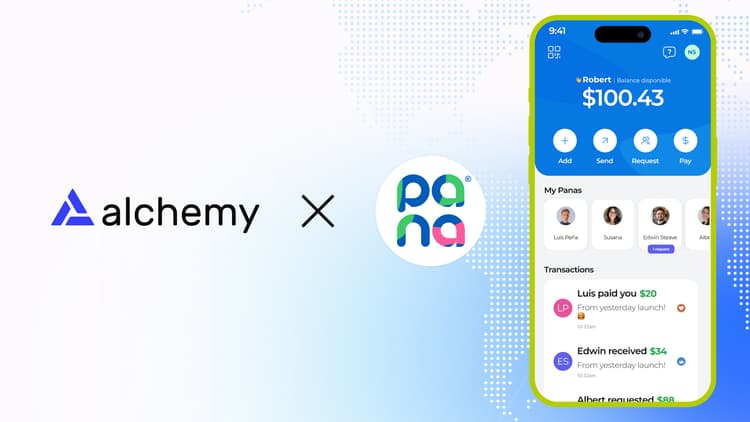
Pana powers stablecoin remittances for 200,000+ users with Alchemy
How Pana made $130B in remittances move like Venmo: 200K users, zero gas fees, no blockchain complexity. See the infrastructure behind it.
Stryke alternatives
Explore web3 competitors and apps like Stryke.
 Derive

 Polynomial Protocol
 Pods Finance
 GammaSwap
App store listings are independently reviewed and written by Alchemy using a combination of inbound submissions, editorial research, public project sources, and third-party directories, including ecosystem data from The Grid under the Open Database License, DefiLlama, DappRadar, Reown, and chain ecosystem pages.