Chord
Chord is a non-custodial trading app and API that routes token swaps across the DEXs on a chain and answers market questions from on-chain data.





What is Chord?
Chord finds a swap route across the venues on a chain and returns it as a single transaction that the user's own wallet signs, and it never holds funds or private keys. Its Ask interface answers questions about tokens, wallets, liquidity pools, and markets in plain language from Chord's own index of on-chain swaps, with Hyperliquid perpetuals also tradable from a connected wallet. Swaps are supported on Ethereum, Arbitrum, Base, BNB Chain, Avalanche, Monad, Arc, and Robinhood Chain, with market data on Solana. Developers and AI agents can use a REST API or a hosted MCP server for quotes, unsigned swap transactions, candles, and wallet PnL. The app is free with paid credit plans, the API has a free tier and paid plans, and swaps carry a protocol fee of 5 bps by default, waived on some stablecoins and majors.
Web3 dapps and developer tools related to Chord
Discover blockchain applications that are frequently used with Chord.
 HeroSwap

 Definitive
 Oku Trade

 altFINS

Developer resources from Alchemy

The complete guide to Solana for financial institutions
BlackRock, Franklin Templeton, and major banks are deploying on Solana. Here’s why institutions are choosing the network, how multi-chain operations change the calculus, and what to demand from infrastructure providers.

What is x402? The payment protocol for AI agents and onchain APIs
x402 is an open protocol that embeds crypto payments into HTTP, letting AI agents pay for API calls in real time: no API keys, no subscriptions, no billing dashboards.
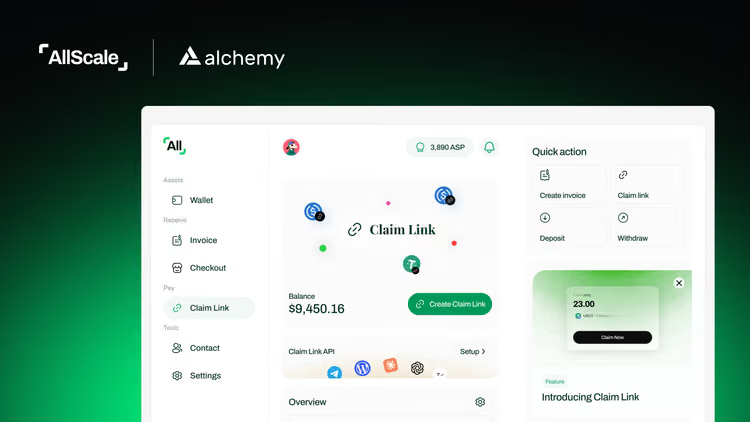
How AllScale powers fast, reliable stablecoin payments at scale
AllScale standardized blockchain reads and transaction requests on Alchemy Node API to power stablecoin checkout, invoicing, payroll, and payouts.
Chord alternatives
Explore web3 competitors and apps like Chord.
 Uniswap

 PancakeSwap
 GROM
 Soheil.fi
App store listings are independently reviewed and written by Alchemy using a combination of inbound submissions, editorial research, public project sources, and third-party directories, including ecosystem data from The Grid under the Open Database License, DefiLlama, DappRadar, Reown, and chain ecosystem pages.