
Echo Zero
Echo Zero is a marketplace where users subscribe to third-party AI trading agents that trade a custodial Solana wallet on Jupiter and Hyperliquid.


What is Echo Zero?
Echo Zero is a marketplace for automated trading agents built by independent developers. Each listed agent publishes its risk level, win rate, and trade history, and subscribers choose how much of their balance each trade uses, with stop-loss, profit-target, and position-sizing controls and a virtual mode for practice. Trades execute through Jupiter and Hyperliquid across crypto, equity, forex, and commodity markets. Each user receives a dedicated Solana wallet whose keys Echo Zero holds so agents can trade continuously, and keys can be exported to Phantom. Echo Zero charges no per-trade fee; instead, it takes a weekly success fee on new profit above a previous high, capped at 30% combined with the agent creator's share, and some creators also charge subscriptions. The service is not available to residents of the United States, the United Kingdom, Ontario, or sanctioned jurisdictions.
Web3 dapps and developer tools related to Echo Zero
Discover blockchain applications that are frequently used with Echo Zero.
 The Hive
 Dexter
 Orix
Orix
 elizaOK

Developer resources from Alchemy
x402 vs MPP: comparing agent payment protocols
x402 and MPP both let AI agents pay for API calls over HTTP, but they differ in payment rails, session support, and protocol-level primitives. Here's how they compare.
Tempo Mainnet is live: introducing the machine payments protocol on Alchemy
Tempo Mainnet is live with the Machine Payments Protocol (MPP)—an open standard for how AI agents pay for services. Alchemy provides Day 1 mainnet infrastructure and full MPP support.
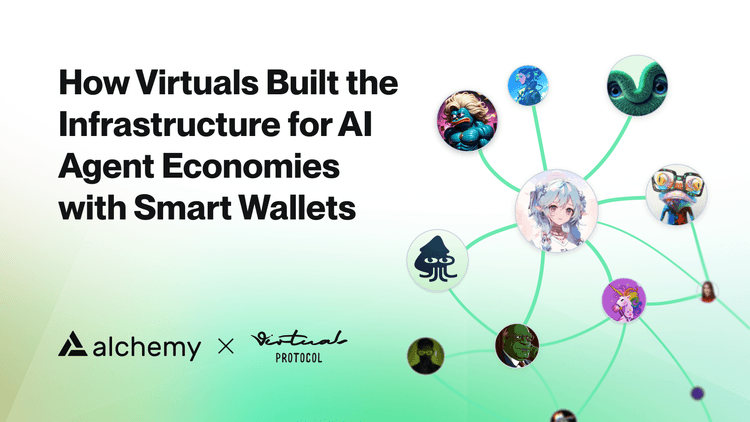
How Virtuals built the infrastructure for AI agent economies with smart wallets
Programmable smart wallets enable tens of thousands of autonomous transactions across 10+ AI agents
Echo Zero alternatives
Explore web3 competitors and apps like Echo Zero.
 Agent Pump
 Contango

 Pionex
 Almanak
App store listings are independently reviewed and written by Alchemy using a combination of inbound submissions, editorial research, public project sources, and third-party directories, including ecosystem data from The Grid under the Open Database License, DefiLlama, DappRadar, Reown, and chain ecosystem pages.