How Goldsky kept transactions flowing with zero downtime
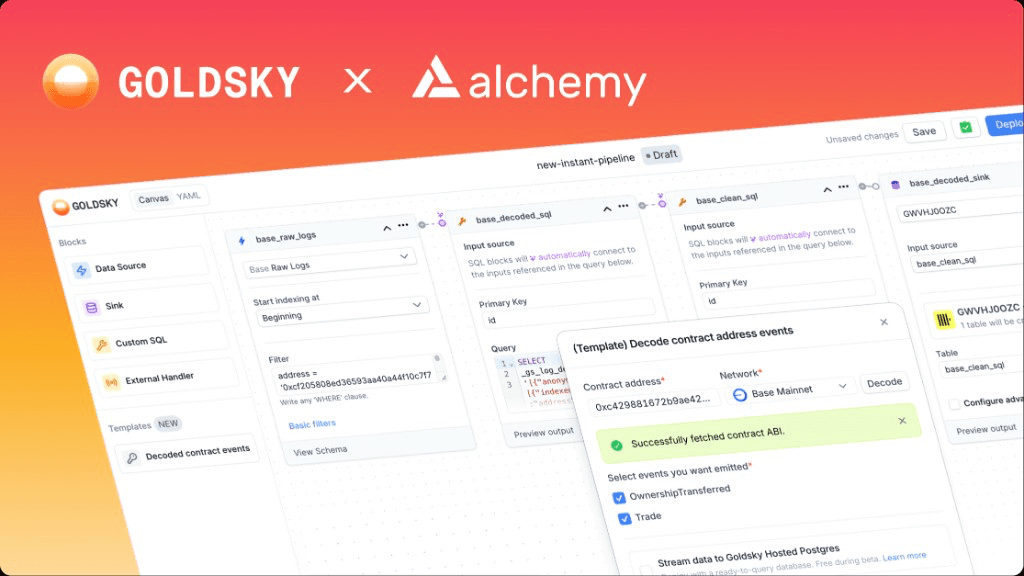
Goldsky handles the hard parts of building on crypto rails: real-time data, reliable connectivity, and onchain execution. Fintechs, banks, and crypto-native teams use it to stream blockchain data with sub-second latency, query onchain state through instant GraphQL APIs, execute durable workflows that react to blockchain events, and connect to hundreds of chains through a single RPC layer. Since 2022, Goldsky has powered mission-critical infrastructure for teams like Polymarket, Phantom, Coinbase, Kraken, and Arweave.
The challenge
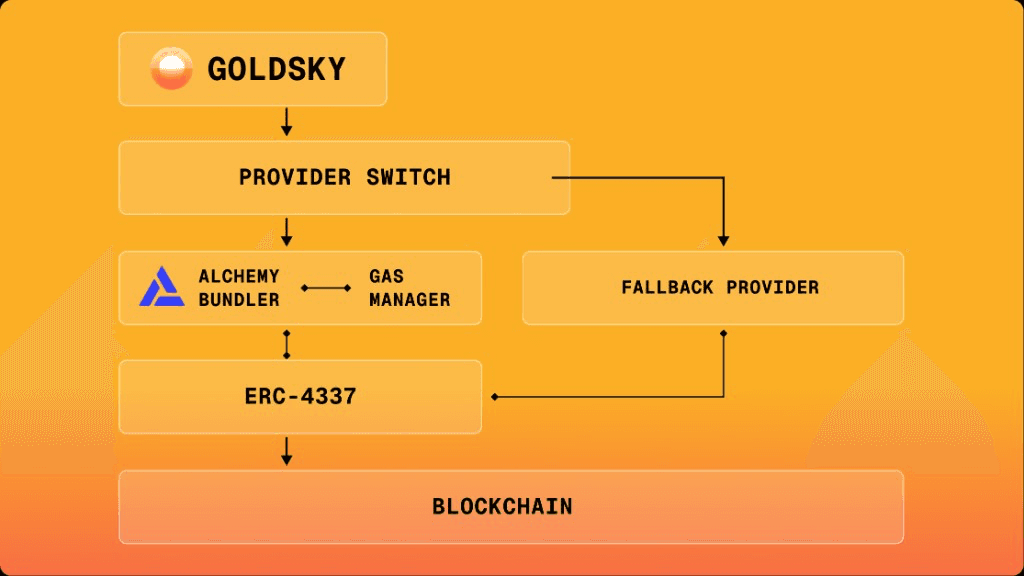
Goldsky's Compose product executes onchain transactions on behalf of customers, and it does it with gas sponsorship using account abstraction. Account abstraction lets an application pay gas for its users and submit transactions on their behalf, so end users never need to hold the network's native token. To make that work, Compose needs two pieces of infrastructure running reliably: a bundler that submits UserOperations to the chain, and a paymaster that sponsors the gas.
The reliability bar here is unforgiving. When an upstream provider goes down, the blast radius is large. Indexers silently fall behind, frontends return errors or stale data, and sponsored transactions fail. For some Compose customers, a failed transaction is a failed trade for a real end user.
Goldsky started on another bundler and paymaster provider. It worked, but it left the team dependent on a single vendor with no fallback path. For infrastructure sitting directly in the transaction path, single-vendor risk was the problem to solve.
The solution
Goldsky set three requirements for a new provider:
- Support for EntryPoint v0.8, which was in private beta at the time. EntryPoint is the singleton contract defined by ERC-4337, the Ethereum account abstraction standard, that bundlers and paymasters coordinate through.
- A policy system for sponsorship control, so the team could decide exactly which transactions get gas sponsored.
- Adherence to the Ethereum standard for account abstraction, so providers could be swapped without code changes.
Alchemy met all three.
Goldsky migrated to Alchemy as its primary bundler and paymaster in Compose, using:
- Alchemy Bundler API
- Alchemy Gas Manager to run gas sponsorship policies
Because both follow the Ethereum standard for account abstraction, Goldsky built a provider abstraction layer on top. Switching providers is now a single environment variable change. No code deploy, no downtime. The single-vendor risk that started the whole effort is now an operational non-issue: if one provider degrades, Goldsky fails over without shipping code.
The results
Compose workflows settle hundreds of millions of dollars in volume per week across thousands of onchain transactions daily, now served by Alchemy's bundler and paymaster. The migration also closed the gap that started the project: with the provider abstraction layer in place, Goldsky can fail over between providers with a single environment variable change—no code deploy, no downtime.
Working with Alchemy
"My experience working with Alchemy engineers was awesome. We hit a couple of snags when we first tried to migrate, and they were always available immediately to fix whatever we ran into. They were quick to get us into beta programs and unlock the features we needed to fully integrate with Compose, and they checked in regularly to see how the migration was going and what else I needed."
— Adam Stockermans, Senior Software Engineer, Goldsky
Ready to get started?
Build on the same infrastructure Goldsky relies on for fast reliable transactions. Get started here, or connect with our team.
Related case studies
 Wallets
November 19, 2025
How Slash built stablecoin banking with smart wallets
How Slash uses smart wallets to power gasless stablecoin banking for 3,000+ businesses globally
 Wallets
September 24, 2025
Mode Mobile brings crypto rewards to 50+ million users with smart wallets
Dive into how Mode Mobile's users earn over $325 million across 170+ countries, with 2+ million five-star reviews on Google Play. Made possible with Smart Wallets.
 Wallets
August 27, 2025
Gensyn builds the world’s first decentralized AI network
450,000 daily transactions powering breakthrough decentralized AI models with zero crypto friction at scale

Build blockchain magic
Alchemy combines the most powerful web3 developer products and tools with resources, community and legendary support.