Liquity
Liquity is a decentralized borrowing protocol on Ethereum that lets users borrow BOLD stablecoin against ETH and staked ETH.


What is Liquity?
Liquity is a non-custodial, governance-free borrowing protocol on Ethereum, founded by Robert Lauko in 2019. With Liquity V2, users can mint BOLD, a decentralized stablecoin rated A- by Bluechip, against ETH and staked ETH collateral at up to 91% LTV, setting their own interest rate. Liquity V2 offers multiply positions up to 11x to increase exposure to ETH and its staking yield. Users can also earn yield by holding sBOLD and ysyBOLD, or stake LQTY to vote and earn rewards. The protocol does not run its own frontend — users access it through independent community-hosted frontends. Liquity V1 continues to operate alongside V2, offering LUSD loans secured by a stability pool and fellow borrowers as guarantors.
Web3 dapps and developer tools related to Liquity
Discover blockchain applications that are frequently used with Liquity.
 Ape Finance
 HypurrFi
 GAIB
GAIB
 Reserve Protocol

Developer resources from Alchemy
What are cross-border digital payments?
Learn how correspondent banking works and how stablecoins are cutting costs by up to 80%.
Cronos is now live on Alchemy
Alchemy has launched support for Cronos, a purpose-built settlement layer for stablecoins and tokenized assets. Connect via RPC and build with gasless transaction infrastructure.
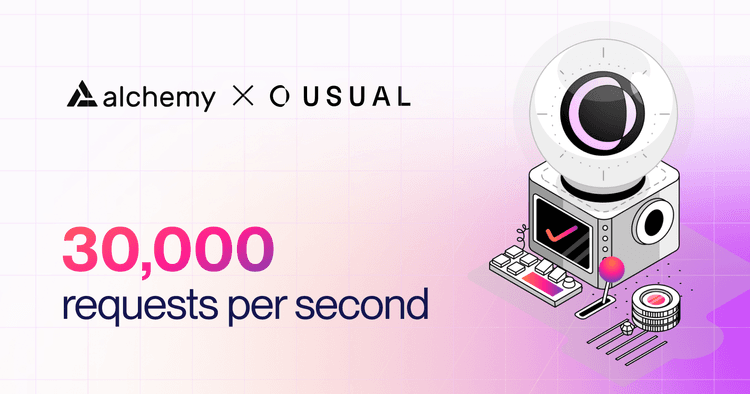
How to scale to 30,000 requests per second. The story behind Usual's seamless airdrop
Usual aims to put ownership back in the hands of its users, by ensuring that value flows back to the community rather than concentrating at the top, paving the way for a fair and community-driven future for stablecoins and token-based finance.
Liquity alternatives
Explore web3 competitors and apps like Liquity.
 River Inc
 Frax Finance
 Sky
Sky Usual
UsualApp store listings are independently reviewed and written by Alchemy using a combination of inbound submissions, editorial research, public project sources, and third-party directories, including ecosystem data from The Grid under the Open Database License, DefiLlama, DappRadar, Reown, and chain ecosystem pages.