
bskts
bskts is an exchange for tokenized index baskets of Stock Tokens and crypto on Robinhood Chain, with basket-level perps on Hyperliquid.



What is bskts?
bskts lets users trade fixed-quantity baskets of Robinhood Stock Tokens and crypto as single tokens on Robinhood Chain, priced at net asset value computed on-chain from each vault's holdings. Accounts are funded in USDG and support market, limit, TWAP, and recurring orders, with gas paid by bskts and a small network fee shown before confirming. Baskets can be redeemed in kind for the underlying tokens at any time. A perps feature opens each basket constituent as its own Hyperliquid perp, in the basket's weights, on the user's own Hyperliquid account. bskts is non-custodial and charges 0.20% on deposits and on redemptions routed to a token, plus an annual management fee per basket. Users can log in with email, Google, X, GitHub, a passkey, or an existing wallet.
Web3 dapps and developer tools related to bskts
Discover blockchain applications that are frequently used with bskts.
 Rialto


 Monday Trade

 Lagoon

 StonkBrokers

Developer resources from Alchemy
Tokenized stocks, explained for developers: how xStocks, Dinari, and Robinhood Chain work
Tokenized stocks explained for developers: what backs xStocks, Dinari dShares, and Robinhood stock tokens, how each works onchain, and what to watch for.

Deposit tokens for banks: a practical playbook
Major banks are quietly processing $10B+ daily in tokenized deposits. Here's how deposit tokens could capture $140 trillion by 2030 and a playbook to integrate for banks.
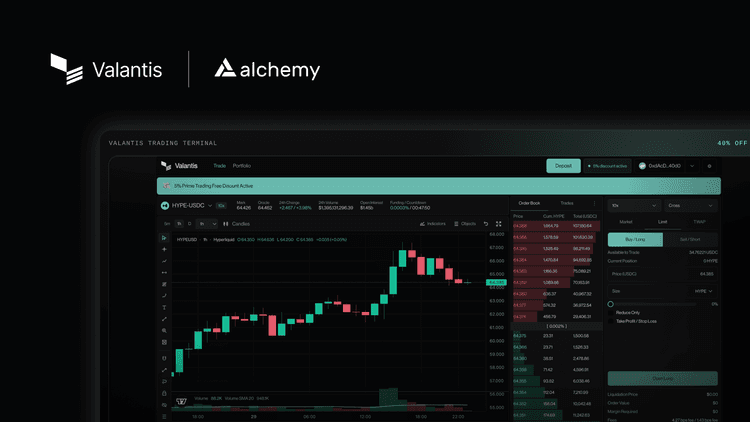
How Valantis built a reliable trading experience on Hyperliquid
After moving HyperEVM RPC calls from a self-hosted node to Alchemy’s HyperEVM Node, Valantis reports 100% successful RPC requests and a more dependable foundation for trading.
bskts alternatives
Explore web3 competitors and apps like bskts.
 SoSoValue


 Reserve Protocol

 GBLIN Protocol
 DEX Finance
App store listings are independently reviewed and written by Alchemy using a combination of inbound submissions, editorial research, public project sources, and third-party directories, including ecosystem data from The Grid under the Open Database License, DefiLlama, DappRadar, Reown, and chain ecosystem pages.